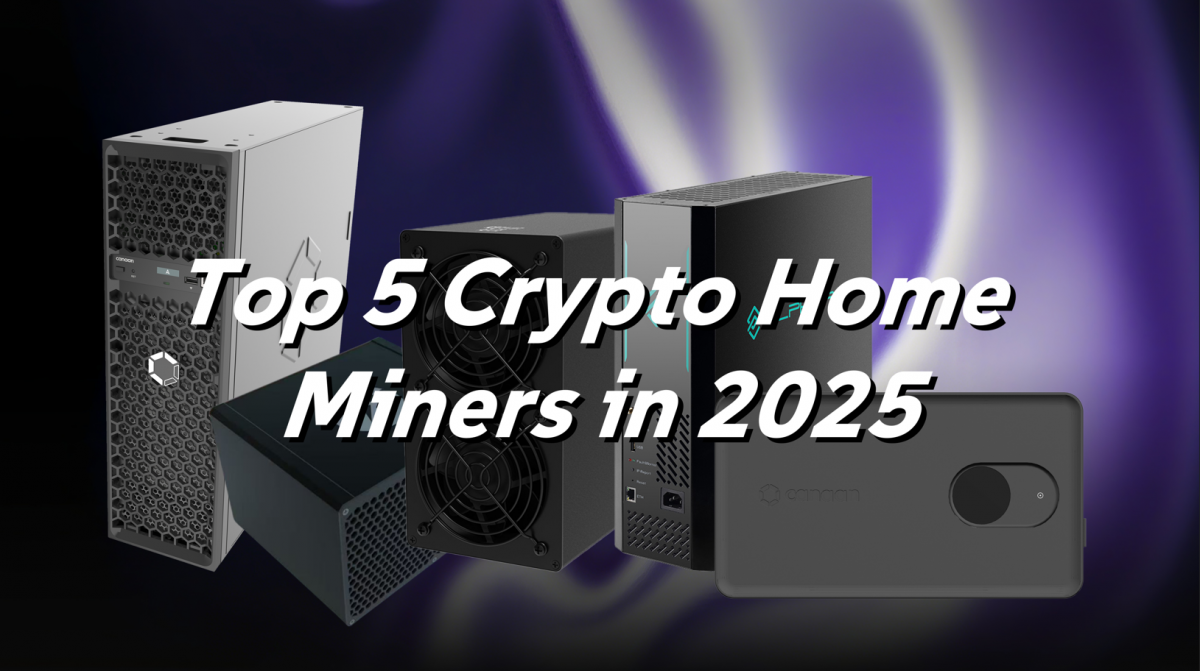
Looking
for the best crypto miners to use at home? The residential cryptocurrency
mining landscape has evolved dramatically in recent years, with manufacturers
now designing equipment specifically for home environments. The top 5 crypto
miners for home use in 2025 strike an optimal balance between hash power,
energy efficiency, and noise management—three critical factors that determine
both profitability and practicality for residential miners.
Why
Mine Crypto at Home in 2025?
Home
cryptocurrency mining has experienced a remarkable resurgence despite
increasing network difficulty and fierce competition from industrial-scale
operations. According to research by Grand View Research, the global
cryptocurrency mining market reached USD 2.43 billion in 2023 and is projected
to grow at a CAGR of 11.4% to reach USD 7.15 billion by 2033, with home mining
continuing to represent a significant growth segment.
Mining
at home provides several distinct advantages over other cryptocurrency
acquisition methods:
- Direct
control: Unlike cloud mining or investing, home mining gives you complete
ownership of both the equipment and the mining process.
- Passive
income potential: Once configured, mining equipment operates continuously
with minimal intervention required.
- Network
participation: Home miners contribute to blockchain decentralization,
supporting the fundamental principles of cryptocurrency.
- Dollar-cost
averaging: Mining provides a systematic way to accumulate cryptocurrency
regardless of market price fluctuations.
However,
profitability remains heavily dependent on operational efficiency. A 2023 study
by the Cambridge Centre for Alternative Finance found that electricity
typically accounts for 70-80% of mining operating costs, making energy
efficiency perhaps the single most critical factor in equipment selection.
How
to Choose the Right Home Crypto Miner
Selecting
the optimal mining equipment for your home environment requires careful
consideration of multiple factors beyond simple hash rate specifications. Let’s
examine each critical decision factor in detail.
Price
and Return on Investment
When
evaluating home mining equipment, the initial purchase price represents only
one component of the total cost of ownership. According to data from BT-Miners, the average ROI period for
mid-range home mining equipment purchased in 2024 ranged from 18-32 months,
assuming stable cryptocurrency prices and network difficulty.
The
initial investment typically falls into these categories:
- Entry-level
home miners: $200-500
- Mid-range
home miners: $500-1,000
- High-performance
home miners: $1,500-3,000+
A
comprehensive ROI calculation must include:
1. Equipment
purchase price
2. Shipping
and import duties (often substantial for international purchases)
3. Setup
costs (power supplies, cooling solutions, networking equipment)
4. Ongoing
electricity expenses
5. Maintenance
and potential repair costs
For
example, a $2,000 miner generating $10 daily in cryptocurrency (after
electricity costs) would require approximately 200 days to reach ROI—assuming
stable mining difficulty and cryptocurrency prices, which is rarely the case.
Most experienced miners recommend calculating ROI scenarios under both
optimistic and pessimistic conditions to set realistic expectations.
Hash
Rate and Mining Performance
Hash
rate—measured in calculations per second—directly determines your mining
equipment’s ability to solve the cryptographic puzzles that validate blockchain
transactions and earn rewards. Higher hash rates increase your probability of
receiving mining rewards, though they typically come with proportionally higher
power consumption.
Hash
rate measurements vary by cryptocurrency:
- Bitcoin
(SHA-256): Measured in TH/s (terahashes per second)
- Litecoin/Dogecoin
(Scrypt): Measured in GH/s (gigahashes per second)
- Monero
(RandomX): Measured in KH/s (kilohashes per second)
For
home miners, equipment offering 30-150 TH/s for Bitcoin or 100-500 MH/s for
Ethereum-based coins typically provides a reasonable balance between
performance and practicality. However, hash rate alone provides an incomplete
picture without considering energy efficiency.
Energy
Efficiency: The Profitability Keystone
Energy
efficiency represents the most critical factor determining long-term mining
profitability. With electricity accounting for 70-80% of ongoing operational
costs, even small differences in efficiency can dramatically impact bottom-line
results.
Mining
efficiency is typically measured in:
- Joules
per terahash (J/TH) for Bitcoin miners
- Watts
per megahash (W/MH) for Ethereum-based miners
Lower
values indicate better efficiency—the equipment produces more computational
power while consuming less electricity. According to Braiins Mining
Insights, the most efficient Bitcoin ASICs in 2024 operate at approximately
25-35 J/TH, a dramatic improvement from the 90-100 J/TH common just five years
ago.
To
calculate potential profitability, you must know your local electricity rate
(cost per kWh). The global average electricity cost for residential users is
approximately $0.15/kWh, but this varies dramatically by location:
- Low-cost
regions ($0.05-0.10/kWh): Parts of Washington state, Idaho, Quebec,
Iceland, Paraguay
- Medium-cost
regions ($0.10-0.20/kWh): Most U.S. states, parts of Canada, many European
countries
- High-cost
regions ($0.20-0.40+/kWh): California, New York, Germany, Denmark, Japan
A
practical example illustrates the importance of efficiency: A Bitcoin miner
operating at 30 J/TH will consume approximately 33% less electricity than one
operating at 45 J/TH for the same hash rate. At $0.15/kWh, this efficiency
difference could represent hundreds or even thousands of dollars annually
depending on the scale of your operation.
Noise
Level:
Traditional
Bitcoin ASIC miners often produce 70-85 dB of noise—comparable to standing next
to a vacuum cleaner running continuously. This noise level is generally
incompatible with residential living spaces.
For
comfortable home use, miners operating below 60 dB are strongly recommended.
Several manufacturers have recently developed “quiet” or “home” versions of
their miners specifically addressing this concern, using larger,
slower-spinning fans and improved airflow designs to reduce noise while
maintaining adequate cooling.
Mining
Pools and Software Considerations
Individual
miners rarely solve blocks independently due to the enormous network hash rates
of major cryptocurrencies. Joining a mining pool combines your resources with
other miners to increase the chances of earning rewards, which are then
distributed proportionally based on contributed hash power.
When
selecting a mining pool, consider:
- Pool
fees: Typically range from 0% to 3% of mining rewards
- Payout
structure: PPS (Pay Per Share), PPLNS (Pay Per Last N Shares), or other
models
- Minimum
payout threshold: Lower thresholds allow more frequent withdrawals
- Server
locations: Pools with servers geographically closer to you reduce latency
- Reliability
and uptime: Established pools typically offer better stability
For
software, user-friendly platforms like NiceHash simplify the process
by automatically switching to mine the most profitable cryptocurrency based on
your hardware capabilities and current market conditions.
Top
5 Crypto Miners for Home Use
After
extensive research and analysis of user experiences, technical specifications,
and real-world performance data, we’ve identified the five best cryptocurrency
miners for home use in 2025. Each selection balances performance, efficiency,
noise levels, and overall value for residential miners.
1.
Canaan Avalon Q (Bitcoin)
Price
: $1400 Daily Earning :0.00004 BTC/day ($5.13)
The Canaan
Avalon Q represents a significant advancement in home Bitcoin mining
technology, offering industrial-level performance in a package designed
specifically for residential environments.
Specifications:
- Hash
Rate: 90 TH/s
- Power
Consumption: 800W-1684W (adjustable)
- Noise
Level: Approximately 45dB
- Algorithm:
SHA-256 (Bitcoin)
- Efficiency:
33.7 J/TH
- Dimensions:
400mm × 195mm × 290mm
- Weight:
8.6 kg
Pros:
- Remarkably
quiet operation compared to industrial miners
- Adjustable
power settings to optimize for efficiency or performance
- Compact
design suitable for home placement
- Lower
heat output than many competing models
- High-quality
construction with reliable components
- User-friendly
interface accessible via web browser
Cons:
- Higher
upfront cost compared to entry-level options
- Still
requires dedicated ventilation
- Limited
to Bitcoin mining only
The
Avalon Q’s adjustable power consumption allows you to balance performance
against electricity costs, making it adaptable to different electricity pricing
scenarios. At its most efficient setting, it consumes approximately 800W while
delivering 30 TH/s, resulting in an efficiency of around 26.7 J/TH—competitive
with many larger industrial miners.
James
Wilson, a home miner from Colorado interviewed by BitcoinMagazine,
reported: “I’ve been running the Avalon Q in my home office for six months.
The noise level is comparable to a desktop PC under load—noticeable but not
disruptive. During winter, I redirect the exhaust heat into my living space,
effectively reducing my heating costs.”
The
Avalon Q’s noise level of around 45dB is comparable to a quiet conversation,
making it one of the more neighbor-friendly Bitcoin miners available. This is
achieved through a sophisticated cooling system using larger, slower-spinning
fans that move more air while generating less noise than conventional designs.
2.
VolcMiner D1 Mini (LTC/Dodge)
Price
: $1199 Daily Earning :0.00306LTC +11.41534DOGE ($2.67)3
The VolcMiner
D1 Mini is designed specifically for mining Litecoin and Dogecoin, making
it an excellent choice for home miners interested in these popular alternative
cryptocurrencies.
Specifications:
- Hash
Rate: 2.2 GH/s
- Power
Consumption: 500W
- Noise
Level: Less than 40dB
- Algorithm:
Scrypt (LTC/DOGE)
- Efficiency:
0.23 J/MH
- Dimensions:
310mm × 125mm × 155mm
- Weight:
4.5 kg
- Operating
Temperature: 5-35°C
Pros:
- Exceptionally
quiet operation suitable for living spaces
- Low
power consumption compatible with standard household circuits
- Mines
both Litecoin and Dogecoin simultaneously (merged mining)
- Compact
form factor ideal for home environments
- Simple
setup process with minimal technical knowledge required
- Stable
performance with reliable hash rate
Cons:
- Limited
to Scrypt algorithm coins
- Limited
availability from authorized resellers
The
D1 Mini’s noise level below 40dB makes it quieter than most household
refrigerators, allowing for placement in living spaces without significant
disruption. This is achieved through an innovative cooling system that
prioritizes airflow efficiency over raw cooling power, resulting in quieter
operation without compromising thermal management.
A
unique advantage of the D1 Mini is its ability to mine both Litecoin and
Dogecoin simultaneously through merged mining, effectively doubling potential
rewards without additional power consumption. According to LitecoinPool.org
statistics, merged mining can increase profitability by 15-30% compared to
mining either coin individually.
3.
IceRiver AE1 Lite (Aleo)
Price
: $1199 Daily Earning : 0.00306LTC +11.41534DOGE
($2.67)3
The IceRiver
AE1 Lite focuses on mining Aleo, a privacy-focused cryptocurrency that
uses zero-knowledge proofs. This specialized miner offers an entry point into
mining emerging cryptocurrencies with potential growth opportunities.
Specifications:
- Hash
Rate: 300 MH/s
- Power
Consumption: Approximately 500W
- Noise
Level: 45dB
- Algorithm:
Aleo
- Dimensions:
330mm × 140mm × 170mm
- Weight:
5.2 kg
- Connectivity:
Ethernet
- Interface:
Web-based dashboard
Pros:
- Energy-efficient
design with optimized power consumption
- Relatively
quiet operation suitable for home environments
- Mines
Aleo, which has lower competition than Bitcoin
- Easy
setup with minimal technical knowledge required
- Compact
footprint suitable for desktops or shelves
- Potential
for higher ROI as Aleo network grows
Cons:
- Limited
to Aleo mining only
- Fewer
mining pools available compared to mainstream coins
- Potential
for higher price volatility in mined assets
4.
ElphaPex DG Home1 (LTC/Dodge)
Price
: $1199 Daily Earning :0.00292LTC +10.89646DOGE ($2.55)3
The Elphapex
DG Home1 has quickly gained popularity among home miners for its
exceptional balance of performance and quiet operation. Specifically designed
for residential use, this miner produces significantly less noise than
industrial models while maintaining competitive efficiency.
With
a hashrate optimized for Dogecoin mining at 2.1 GH/s and power consumption
under 680W, the DG Home1 offers an accessible entry point for home miners. Its
noise profile stays below 50 dB under normal operation, making it one of the
quieter options available on the market.
The
unit’s compact design allows for flexible placement within home environments,
and its built-in cooling system efficiently manages heat without excessive fan
noise. For miners prioritizing quiet operation without sacrificing too much
performance, the Elphapex DG Home1 represents an excellent compromise.
Specifications:
- Hash
Rate: 2.1 GH/s
- Power
Consumption: 630W
- Noise
Level: Less than 40dB
- Algorithm:
Scrypt (LTC/DOGE)
- Efficiency:
0.23 J/MH
- Dimensions:
310mm × 125mm × 155mm
- Weight:
4.5 kg
- Operating
Temperature: 5-35°C
Pros:
- Exceptionally
quiet operation suitable for living spaces
- Low
power consumption compatible with standard household circuits
- Mines
both Litecoin and Dogecoin simultaneously (merged mining)
- Compact
form factor ideal for home environments
- Simple
setup process with minimal technical knowledge required
- Stable
performance with reliable hash rate
Cons:
- Limited
to Scrypt algorithm coins
- Limited
availability from authorized resellers
5. Canaan
Avalon Nano 3S (Bitcoin)
Price
: $329 Daily Earning : $0.34
The Avalon
Nano 3S offers a compelling option for home miners seeking a compact,
energy-efficient solution. This smaller miner delivers modest but reliable
performance with significantly reduced noise levels compared to larger ASIC
miners.
With
its power consumption under 500W and noise levels around 45 dB, the Nano 3S can
operate unobtrusively in home environments. While its hashrate of 45 TH/s is
lower than industrial-grade equipment, its excellent efficiency of 26 J/TH
helps maintain profitability even with lower overall output.
The
Nano 3S features simple setup and maintenance requirements, making it
accessible to mining beginners. Its smaller form factor allows for flexible
placement options within residential settings, and the reduced heat output
minimizes cooling concerns. For home miners prioritizing quiet operation and
energy efficiency over maximum hashrate, the Avalon Nano 3S presents a balanced
solution.
Specifications:
- Hash
Rate: 6 TH/s
- Power
Consumption: 140W
- Noise
Level: Less than 40dB
- Algorithm:
SHA-256 (Bitcoin)
- Efficiency:
29 J/TH
- Dimensions:
205mm × 115mm × 58mm
- Weight:
0.8 kg
- Operating
Temperature: 5-35°C
Pros:
- Exceptionally
quiet operation suitable for living spaces
- Low
power consumption compatible with standard household circuits
- Compact
form factor ideal for home environments
- Simple
setup process with minimal technical knowledge required
- Stable
performance with reliable hash rate
Conclusion
In
2025, the home cryptocurrency mining sector has seen remarkable advancements,
with manufacturers crafting equipment tailored for residential use. The top 5
crypto miners highlighted here strike a crucial balance between hash power,
energy efficiency, and noise management, which are key to both profitability
and practicality for home miners.
Home
mining persists as an appealing option due to its distinct advantages,
including direct control over equipment and the mining process, passive income
potential with minimal intervention, contribution to blockchain
decentralization, and a systematic way to accumulate cryptocurrency amid market
fluctuations. However, profitability hinges heavily on operational efficiency,
as electricity constitutes 70-80% of mining costs, making energy efficiency a
paramount factor in equipment selection.
When
choosing a home crypto miner, several factors demand consideration. Price and
return on investment (ROI) involve not just the initial purchase cost but also
shipping, setup, electricity, maintenance, and repair expenses. Hash rate,
which varies by cryptocurrency, determines mining performance, though it must
be evaluated alongside energy efficiency. Energy efficiency, measured in units
like J/TH for Bitcoin, directly impacts long-term profitability, with lower
values indicating better efficiency. Noise level is another critical aspect,
with home-friendly miners operating below 60 dB to avoid disrupting residential
spaces. Additionally, selecting the right mining pool and software, such as
user-friendly platforms like NiceHash, is essential for optimizing rewards.
The
top 5 home crypto miners for 2025 each offer unique features. The Canaan Avalon
Q (Bitcoin) stands out with adjustable power settings, quiet operation (around
45dB), and a compact design, though it has a higher upfront cost. The VolcMiner
D1 Mini (LTC/DOGE) impresses with ultra-quiet operation (less than 40dB), low
power consumption, and the ability to mine both Litecoin and Dogecoin
simultaneously. The IceRiver AE1 Lite (Aleo) caters to those interested in
emerging cryptocurrencies, offering energy efficiency and relatively quiet
operation, though it is limited to Aleo mining. The ElphaPex DG Home1
(LTC/DOGE) is popular for its balance of performance and quietness (less than
40dB) and merged mining capability. The Canaan Avalon Nano 3S (Bitcoin) is an
affordable, compact option with low power consumption and quiet operation,
suitable for beginners.
Thank
you for your patient reading. For any inquiries or to explore these miners
further, welcome to contact BT-MINERS.
 Releases Monitor
 Broadcast locally signed transactions
 FAQ
FAQ Halving countdown
 Add Blockexplorer.one to your website
 Bitcoin
 Ethereum
 Bitcoin Cash
 Litecoin
 DogeCoin
 Dash
Dash
 Ethereum Classic
 Binance Smart Chain
 Tron
Tron
 ZCash
ZCash
 XRP
XRP


 Scan QR