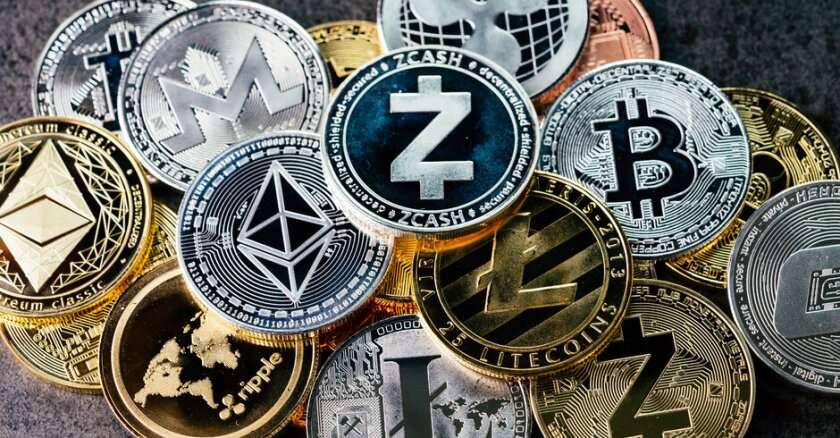
Beyond Bitcoin, thousands of
coins compete for investor attention. Here is a clear-eyed look at who is
winning, who is losing, and what any newcomer should know before putting a
dollar in.
What Are Altcoins and Why Do They Matter?
Most people new to crypto know
Bitcoin, but everything else in the market is called an altcoin. That includes
networks with specific use cases, such as Algorand, which is built for fast,
low-cost transactions and is often researched by beginners looking to buy ALGO or compare it with larger
coins like Ethereum and Solana.
There are more than 18,000
cryptocurrencies in circulation across over 1,360 exchanges, and altcoins make
up about 44% of the roughly $2.4 trillion crypto market as of early 2026. They
matter because they serve very different purposes: some aim to solve real
problems, while others are driven mostly by hype and social media.
Understanding that difference will not make you an expert overnight, but it
will help you ask better questions before investing.
The Altcoin Landscape at a Glance
Not all altcoins are created
equal. Some have been around for years and have real businesses built on top of
them. Others were launched last week by anonymous developers and will likely be
gone by next month. The table below covers the main categories you will hear
about, what drives them, and the level of risk each one carries.
Major Altcoin Categories — A
Simple Comparison
|
Category
|
Well-known examples
|
What drives them
|
Who is buying
|
Risk level
|
|
Memecoins
|
DOGE, SHIB, PEPE, WIF
|
Social media, celebrity posts,
internet culture
|
Retail, speculators
|
Very high
|
|
Smart contract platforms
|
ETH, SOL, AVAX, ADA
|
Developer activity, app usage,
ecosystem growth
|
Institutions, developers,
retail
|
Medium
|
|
DeFi tokens
|
AAVE, UNI, LINK
|
Protocol fees, lending and
borrowing activity
|
DeFi users, yield seekers
|
Medium–High
|
|
Real-world asset tokens
(RWA)
|
ONDO, Centrifuge, Maple
|
Institutional adoption,
tokenized bonds and real estate
|
Institutions, funds,
experienced retail
|
Lower
|
|
AI and infrastructure tokens
|
TAO (Bittensor), RNDR, FET
|
AI development demand, compute
networks
|
Tech investors, speculators
|
High
|
|
Gaming and metaverse tokens
|
IMX, SAND, AXS
|
Player activity, in-game
economies, NFT usage
|
Gamers, speculators
|
High
|
|
Stablecoins
|
USDC, USDT, DAI
|
Pegged to fiat; used for
transactions and savings
|
Everyone in crypto
|
Very low
|
Each category behaves differently
depending on market conditions. When confidence is high and money is flowing
in, memecoins and AI tokens tend to spike dramatically. When the market turns
cautious, investors often rotate into more stable areas like smart contract
platforms and real-world asset tokens. Understanding these patterns is more
useful than chasing whatever is trending on a given Tuesday.
Memecoins: Fun, Chaos, and Real Money
Memecoins are exactly what they
sound like. They started as jokes — Dogecoin was created in 2013 as a parody of
Bitcoin, featuring the famous Shiba Inu dog from an internet meme. Nobody
expected it to become a multi-billion-dollar asset. And yet here we are.
The numbers behind the memecoin market are hard to ignore. Trading volumes
surged by more than 767% from a daily average of $1.1 billion in 2023 to $9.7
billion in 2024.
Dog-themed coins still dominate,
making up around 39.5% of the total memecoin market cap by value. And the
United States accounts for roughly 30% of all memecoin-related interest
globally.
"The memecoin sector
posted average returns of +1,313% in the first half of 2025 — making it the
only crypto segment to finish that period in profit."
That kind of number gets people
excited. And it should also make you careful. Because the same segment that
delivered those gains to early buyers wiped out most people who arrived late.
President Trump's own memecoin — $TRUMP — launched at $73 in January 2025 and
had dropped 95% to around $3.41 by February 2026. That is not unusual. New
memecoin launches show survival rates below 8% after just 60 days, and most
lose more than 97% of their peak value before disappearing.
Investor
note
Over 70% of most memecoin
supplies are held by the top 100 wallets. This means a small number of people
can sell at any time and crash the price in minutes. If you cannot afford to
lose everything you put in, memecoins are not the right place to start.
None of this means memecoins are
entirely without value or reason. Community is a real force in crypto.
Dogecoin's decades-long survival is proof of that. But the gap between the
handful that last and the millions that vanish is enormous — and most newcomers
have no reliable way to tell which side of that gap any new coin is on.
Utility Tokens: The Coins That Actually Do Something
Utility tokens are the workhorses
of the crypto world. They do not rely on viral posts or celebrity endorsements
to hold their value. Instead, they are built to perform a function inside a
network — and their value tends to track how much that function is actually
being used.
Here are six of the most common
things utility tokens are designed to do:
1. Payments and transfers. Tokens like XRP and Stellar
(XLM) are built to move money across borders faster and cheaper than
traditional banking — often settling in seconds for a fraction of a cent.
2. Lending and borrowing. DeFi platforms like Aave let
users lend out crypto and earn interest, or borrow against their holdings
— all without a bank account. AAVE tokens are used to govern how the
platform operates.
3. Running applications. Ethereum (ETH) and Solana (SOL)
are platforms that developers build apps on. Using those apps requires the
network's native token to pay for computation — similar to paying postage
to send a letter.
4. Governance and voting. Many projects give token
holders a vote on how the protocol changes or spends its treasury. Holding
the token is like holding a share in a cooperative that you can actually
influence.
5. AI and computing power. Tokens like Render (RNDR) let
people buy and sell unused graphics processing power — enabling AI image
generation and 3D rendering on a shared, decentralised network.
6. Tokenized real-world assets. Newer tokens represent
ownership of things like Treasury bonds, real estate, or private credit.
You can hold a digital version of a US government bond in a crypto wallet
and earn interest on it daily.
The important distinction here is
sustainability. A utility token's value is tied to activity — the more people
use the network, the more demand there is for the token. This does not make
utility tokens risk-free. Many have failed. But they have a reason to exist
beyond the next viral moment, and that matters when you are thinking about
holding something for longer than a few days.
The Segments Attracting the Most Money Right Now
Not all parts of the altcoin
market are growing at the same pace. In 2025, a clear shift took place:
institutional investors and serious capital began moving toward segments with
real-world traction, while pure speculation in memecoins cooled significantly
after a chaotic start to the year.
1. $18.6B Tokenized real-world assets on-chain by end of
2025, up from $5.5B at the start of the year
2. $165B Total value locked in DeFi protocols, driven by
lending, borrowing, and yield products
3. 260%Growth in tokenized real-world asset value over
the course of 2025 alone
The segment that drew the most
serious attention from institutions was real-world asset tokenization. Asset
managers including BlackRock, Franklin Templeton, and Hamilton Lane began
deploying real capital into tokenized Treasury products and private credit
pools. By the end of 2025, RWA protocols had overtaken decentralised exchanges
to become the fifth-largest category in DeFi by total value locked.
Smart contract platforms — led by
Ethereum and Solana — also held strong. Ethereum finished 2025 up around 50%
and attracted billions in ETF inflows. Solana continued to grow its developer
ecosystem and became the go-to platform for new token launches of every kind,
from serious infrastructure projects to the latest wave of memecoin
experiments.
Blockchain gaming attracted
around $13.97 billion in market value, and decentralised physical
infrastructure networks — projects that use token incentives to build real
things like wireless networks and data storage — began drawing the kind of
early-stage attention that often precedes bigger moves.
"Capital increasingly
rewarded utility, compliance, and durability — rather than novelty." —
Grayscale Research, Q4 2025
AI-related tokens were the
notable disappointment. Despite enormous hype, the sector average fell around
50% through 2025. The survivors — projects with real functionality rather than
just a compelling story — held on, but it was a painful year for anyone who
bought on narrative alone.
How to Tell a Good Altcoin from a Bad One
There is no perfect filter. But
there are questions that any investor — experienced or not — should ask before
putting money into any altcoin. These are not technical questions. They are
common-sense ones.
Does it solve a real problem? The
best altcoins exist because they do something more efficiently than the
alternatives. If you cannot explain in one sentence what the project actually
does, that is a warning sign.
Who is using it, and how much?
On-chain data is publicly available for most blockchain projects. Look at the
number of active users, daily transactions, and whether those numbers are
growing or shrinking. A project with falling usage has a harder road ahead
regardless of what its team says.
Who owns the supply? If a small
number of wallets control most of the token supply, a single large seller can
devastate the price. Many data tools — including Etherscan and similar
blockchain explorers — let you check this for free.
Is there a real team behind it?
Anonymous developers are common in crypto, and not all of them are bad actors.
But an identifiable, experienced team with a track record is a meaningful point
of reassurance. Check whether the project has been audited by a reputable
security firm.
What happens if the hype stops?
This is the most important question for memecoins in particular. If the answer
is "the price collapses and nothing is left," you are holding
something that depends entirely on momentum — and momentum always ends.
A useful habit
Before buying any altcoin, spend
20 minutes reading its official documentation (often called a
"whitepaper") and searching for critical coverage — not just price
predictions. If you cannot find either, that tells you something important.
Where Is This All Heading?
The crypto market of 2026 looks
quite different from the one that existed just two years ago. The gap between
speculative coins and genuinely useful ones is widening — and the money is
starting to reflect that. Institutional investors who once avoided crypto
entirely are now holding tokenized Treasury bonds and Ethereum ETFs. Regulatory
frameworks in the US, EU, and parts of Asia have given large funds the legal
clarity they needed to participate.
This does not mean the
speculative corner of the market is going away. Memecoins will always attract
people chasing quick returns, and some of those people will make money. But the
market overall is maturing. Projects that cannot demonstrate real usage are
finding it harder to raise fresh capital. The era where a clever name and a
Telegram group were enough to launch a successful coin is largely over.
For someone approaching this
market for the first time, that is actually good news. A more mature market
rewards research over gambling. The projects most likely to be around in five
years are already showing what they can do — in the form of users, transactions,
fees, and institutional partners. Those are the signals worth paying attention
to.
Real-world asset tokenization is
projected to reach as much as $2 trillion by 2030 according to analyst
estimates, while DeFi is expected to grow at a 43% compound annual rate through
the end of the decade. That is not a guarantee that any specific token will go
up. But it does suggest that the infrastructure being built right now is being
built for something real — and that is a different kind of bet than buying a
coin because someone famous tweeted about it
 Releases Monitor
 Broadcast locally signed transactions
 FAQ
FAQ Halving countdown
 Add Blockexplorer.one to your website
 Bitcoin
 Ethereum
 Bitcoin Cash
 Litecoin
 DogeCoin
 Dash
Dash
 Ethereum Classic
 Binance Smart Chain
 Tron
Tron
 ZCash
ZCash
 XRP
XRP


 Scan QR