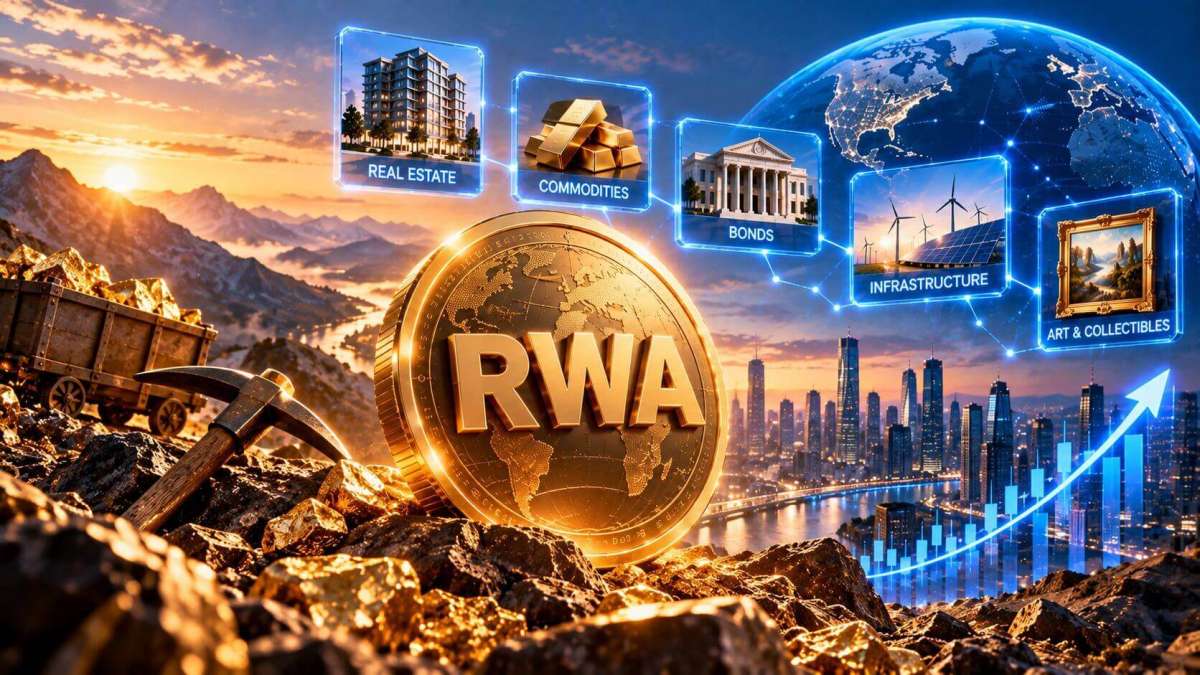
For more than a decade, Bitcoin
has dominated conversations about cryptocurrency wealth, attracting investors
who believe digital assets could transform the global financial system. Yet
another opportunity is developing beyond the familiar world of Bitcoin trading
and speculative altcoins. Real-world asset tokenization, commonly known as
crypto RWA, is connecting blockchain technology with traditional investments
such as gold, government bonds, stocks, and real estate. As institutional
adoption accelerates, this emerging market could create a new wave of financial
innovation and competition for investment capital.
The growing number of
opportunities also makes careful research increasingly important.
Cryptocurrency communities frequently promote trading strategies, investment
platforms, and private discussion groups, but investors should distinguish
transparent services from potentially misleading offers. When exploring
WhatsApp-based trading communities, looking for vetted providers with reviewsand pricing can be a useful starting point, although independent verification
remains essential. The same principle applies to RWA investments, where the
quality of the underlying asset, legal ownership structure, and credibility of
the issuer matter far more than promotional promises.
A Gold Rush Without the Gold Mines
The historical gold rush
attracted people searching for valuable resources that had previously been
difficult to access. Crypto RWA presents a different version of that
opportunity.
Instead of discovering new
physical resources, financial technology companies are developing ways to
represent existing assets through digital tokens.
These tokens can correspond to
legally defined claims involving securities, commodities, loans, or investment
funds. Blockchain infrastructure can record their transfers and support certain
automated financial operations.
The attraction lies in the scale
of the markets involved.
Global financial institutions
already manage enormous portfolios of bonds, investment funds, and other
assets. Even a relatively small portion of these markets moving onto
blockchain-based infrastructure could create substantial demand for
tokenization services.
However, this does not mean that
tokenization automatically increases the value of the underlying assets.
A government bond remains a
government bond, regardless of whether its ownership records are maintained
through conventional systems or blockchain technology.
The potential economic value
comes from improving how these assets are issued, administered, transferred,
and used within financial markets.
Why Bitcoin's Success Opened the Door to Something Bigger
Bitcoin demonstrated that
blockchain networks could support digital assets without relying on a
conventional central issuer.
Its success helped establish the
technological foundations and investor interest that later encouraged
experimentation with other blockchain applications.
Ethereum expanded these
possibilities through smart contracts, allowing developers to create
programmable financial services and digital assets.
Real-world asset tokenization
builds on these developments while introducing a fundamentally different
economic model.
Bitcoin's value is influenced by
factors such as scarcity, adoption, market liquidity, and investor demand.
Tokenized financial instruments,
by contrast, can derive their economic characteristics from identifiable assets
and contractual arrangements.
A tokenized bond may provide
exposure to interest payments. A gold-backed token can represent a claim linked
to physical bullion. A tokenized investment fund can represent an interest in a
portfolio managed by a financial institution.
This connection to conventional
financial products could attract participants who have little interest in
speculative cryptocurrency trading.
Rather than replacing Bitcoin,
RWA may expand the range of economic activities supported by blockchain
infrastructure.
Digital Gold Is Becoming More Than a Metaphor
One of the most interesting
developments in the RWA sector involves actual gold.
Gold-backed digital tokens allow
eligible users to obtain exposure to physical bullion through blockchain-based
instruments.
Products such as Tether Gold and
Pax Gold have demonstrated demand for this type of asset representation.
According to CoinGecko's 2026 RWA
research, tokenized commodities expanded significantly during 2025 and the
first quarter of 2026, with gold-backed products accounting for much of that
growth.
This development connects two
investment markets that historically operated through different
infrastructures.
Gold investors traditionally rely
on physical bullion, exchange-traded products, or other financial instruments
linked to precious metals.
Tokenized gold introduces another
method of holding and transferring certain claims associated with the
commodity.
The appeal may include digital
transferability, fractional denominations, and integration with compatible
blockchain applications.
However, the quality of a
gold-backed token depends on its custody arrangements, redemption terms,
reserve verification, and legal structure.
A token's existence on a
blockchain does not independently prove that the corresponding gold is securely
held or available for redemption.
The gold rush analogy is
therefore particularly appropriate, but investors must distinguish the value of
the underlying metal from the risks of the digital product representing it.
The Real Treasure May Be Hidden in Financial Infrastructure
During historical periods of
rapid economic expansion, businesses supplying essential services sometimes
benefited as much as the participants searching for valuable resources.
A similar pattern could emerge in
tokenization.
As financial institutions issue
more tokenized products, they may require specialized technology for custody,
identity verification, asset administration, transaction processing, and
regulatory compliance.
These services can create
recurring business opportunities.
A tokenization platform might
earn fees from financial institutions issuing digital securities. A custody
provider could generate revenue by safeguarding assets and managing secure
transaction infrastructure.
Software companies may develop
systems that connect blockchain networks with conventional banking and
investment platforms.
The success of these businesses
would depend on customer demand, commercial execution, and competitive
positioning.
For investors interested in the
broader RWA economy, infrastructure providers may offer a different form of
exposure than purchasing speculative cryptocurrencies.
The distinction is important
because a rapidly growing tokenization market does not guarantee that every
RWA-related token will increase in value.
The Institutional Buyers Are Already Arriving
The involvement of established
financial institutions has helped transform tokenization from an experimental
concept into a developing commercial market.
BlackRock's BUIDL fund, developed
with Securitize, demonstrates how a major asset manager can use blockchain
infrastructure in connection with traditional financial instruments.
Franklin Templeton has also
developed blockchain-enabled investment products, while other financial
organizations are exploring tokenized securities, deposits, and settlement
arrangements.
These initiatives are significant
because institutional participants generally require dependable legal
structures, custody arrangements, and compliance systems.
Their involvement encourages the
development of infrastructure that can support regulated financial activity.
For banks and asset managers,
tokenization is not necessarily an attempt to compete with Bitcoin.
It is an opportunity to modernize
parts of the financial system they already operate.
This creates a market in which
traditional finance and cryptocurrency technology increasingly overlap.
The resulting partnerships could
become an important driver of long-term adoption.
A New Market for Assets That Rarely Change Hands
Some financial assets are
difficult to trade because ownership transfers involve complicated
administrative procedures or because potential buyers are limited.
Private credit, certain
investment funds, and property-related securities can face these challenges.
Tokenization could simplify parts
of the ownership transfer process by allowing approved participants to exchange
digitally represented investment interests.
For example, a private investment
fund might use blockchain infrastructure to maintain ownership records and
enforce restrictions on eligible investors.
A property investment vehicle
could issue digital securities representing economic interests associated with
a portfolio of buildings.
These arrangements may improve
administration and potentially broaden distribution.
However, tokenization cannot
create demand where none exists.
A commercial property in a
declining market may remain difficult to sell, regardless of whether the
investment is divided into digital tokens.
Similarly, private credit
investments remain exposed to borrower defaults and uncertain valuations.
The most valuable tokenization
projects may therefore be those that improve market efficiency without
exaggerating the liquidity benefits.
Why the RWA Market Is Growing Beyond Treasury Products
Government securities have played
an important role in the early development of institutional tokenization.
They are widely understood,
supported by established financial markets, and frequently used for cash
management and collateral.
Tokenized Treasury-related
products allow eligible investors to access familiar financial exposure through
blockchain-enabled structures.
Their popularity has helped
demonstrate that tokenization can serve practical financial purposes.
Yet the RWA market is expanding
into additional categories.
Tokenized gold has attracted
substantial activity, while blockchain-based representations of equities and
investment funds are receiving growing attention.
These developments suggest that
the technology is gradually moving beyond its earliest applications.
Different asset classes will
still face different challenges.
A standardized government
security is generally easier to administer than a unique property investment
involving local ownership laws and ongoing operational expenses.
The expansion of RWA is therefore
likely to occur unevenly, with the most practical applications developing
faster than more complicated investment structures.
Could Tokenized Stocks Become the Next Major Attraction?
Stocks are among the most
recognizable financial instruments in the world.
They provide investors with
exposure to companies and, depending on the security, may include rights
associated with dividends, voting, and corporate ownership.
Tokenization could introduce new
methods of representing and transferring certain equity interests.
Some platforms already offer
digital instruments linked to publicly traded shares, although their legal
structures differ considerably.
Certain products provide
synthetic price exposure rather than direct ownership of the underlying stock.
Others are designed to preserve
recognized securities rights within regulated arrangements.
This distinction matters because
investors purchasing a token linked to a company may not necessarily become
shareholders of that company.
The future of tokenized equities
will depend on regulatory requirements, market infrastructure, and the ability
of platforms to provide reliable ownership and settlement arrangements.
If these challenges are
addressed, tokenized stock products could become a meaningful component of
digital financial markets.
However, their success will
depend on practical advantages rather than the novelty of representing shares
on a blockchain.
The Competition for RWA Investors Is Getting More Serious
As tokenization attracts greater
attention, competition between financial service providers is increasing.
Traditional asset managers bring
established customer relationships, investment expertise, and regulatory
experience.
Cryptocurrency companies
contribute blockchain infrastructure, digital wallets, and experience
developing programmable financial applications.
Specialized fintech businesses
may focus on connecting these two environments.
Each group has different
strengths.
Established institutions can
offer familiar financial products through new technological channels, while
blockchain-native companies may develop services that integrate tokenized
assets with other digital financial applications.
The competition could encourage
improvements in transaction processing, custody, and investment administration.
It may also lead to consolidation
as larger companies acquire specialized technology providers or develop
competing infrastructure internally.
For investors, this means that
early participation in the RWA sector does not automatically guarantee
long-term success.
Businesses must demonstrate
sustainable advantages as the market becomes more competitive.
The Biggest RWA Opportunity Might Be Invisible to Retail
Traders
Cryptocurrency investors often
evaluate new markets through token prices, trading volumes, and social media
attention.
Institutional tokenization may
develop through activities that are much less visible.
Banks could use blockchain-based
systems to manage eligible collateral. Asset managers might automate portions
of fund administration. Financial institutions could coordinate securities
settlement through connected digital platforms.
These activities may generate
economic value without creating dramatic movements in cryptocurrency prices.
A successful tokenization service
could earn recurring fees from institutional customers while remaining largely
unknown to retail traders.
Similarly, a bank might benefit
from reduced operational costs without issuing a publicly traded
cryptocurrency.
This suggests that the RWA
economy could reward different types of participants than previous speculative
cryptocurrency cycles.
The most important beneficiaries
may include companies capable of solving expensive operational problems within
conventional financial markets.
What Could End the RWA Gold Rush Before It Begins?
Despite growing enthusiasm,
tokenization faces obstacles that could slow its expansion.
Financial institutions must
determine whether blockchain-based infrastructure provides sufficient
advantages over existing systems.
Modern financial markets already
use sophisticated electronic technology, and replacing established
infrastructure can be expensive.
Legal uncertainty is another
challenge.
A digital token must be connected
to enforceable rights, particularly when it represents securities or claims
against physical assets.
Investors need clarity regarding
custody, redemption, insolvency procedures, and the responsibilities of
issuers.
Cybersecurity risks also remain
important.
Smart contract vulnerabilities,
compromised private keys, and operational failures can create losses even when
the underlying financial asset is sound.
Liquidity represents another
potential limitation.
A tokenized investment may be
technically transferable at any time but still lack buyers willing to purchase
it at a reasonable price.
If these challenges remain
unresolved, tokenization could develop more slowly than optimistic market
forecasts suggest.
The Difference Between a Gold Rush and a Financial Bubble
Rapidly growing industries often
attract speculative capital.
Investors may purchase assets
associated with a popular technological trend without carefully evaluating
their economic fundamentals.
The RWA sector is vulnerable to
this behavior.
A project may promote
partnerships, announce plans to tokenize valuable assets, or emphasize large
market forecasts without demonstrating a sustainable business model.
Such announcements do not
necessarily translate into revenue, profitability, or demand for an associated
cryptocurrency.
A genuine commercial opportunity
requires more than an attractive narrative.
The underlying product must
provide value to customers, operate within a reliable legal framework, and
generate sufficient economic benefits to justify its costs.
Investors should also distinguish
between the value of tokenized assets and the market capitalization of
companies or cryptocurrencies involved in tokenization.
Moving a billion dollars of
existing securities onto a blockchain does not create a billion dollars of new
economic wealth.
The process may improve financial
efficiency, but its investment value depends on who captures those
improvements.
What the Next Chapter Could Look Like
The future of RWA may involve a
gradual expansion from specialized institutional products into broader
financial services.
Tokenized government securities
and investment funds could continue attracting organizations interested in
digital administration and settlement.
Gold-backed tokens may remain
relevant to investors seeking commodity exposure through blockchain-based
instruments.
Other asset classes, including
corporate debt, private credit, and selected equities, could develop as legal
frameworks and market infrastructure improve.
Over time, financial institutions
may connect these products with programmable payment systems and more efficient
collateral arrangements.
Retail investors might eventually
access certain tokenized instruments through familiar brokerage platforms
without directly interacting with blockchain technology.
This would represent a
significant shift from the early cryptocurrency market, where participation
often required specialized technical knowledge.
Nevertheless, adoption will
depend on commercial incentives, investor protections, and reliable financial
infrastructure.
Not every asset needs to be
tokenized, and some traditional systems may remain more efficient for
particular applications.
Beyond Bitcoin, a Different Kind of Wealth Creation
Bitcoin established the
possibility of a globally recognized digital asset operating outside
conventional issuance structures.
Crypto RWA is exploring how
blockchain technology can support the financial instruments that already
underpin the global economy.
The opportunity is substantial
because the markets involved extend far beyond cryptocurrency trading.
Government debt, commodities,
investment funds, and other traditional assets collectively represent enormous
amounts of financial value.
Tokenization could create new
businesses, improve selected financial processes, and expand the range of
services available through digital platforms.
Yet the potential rewards will
not be distributed equally.
Some companies may become
important infrastructure providers, while others could struggle with
regulation, competition, or weak customer demand.
For investors, the most useful
approach is to evaluate the economic substance behind each opportunity rather
than relying on the excitement surrounding a growing industry.
The next crypto gold rush may not
be about discovering another Bitcoin. It may be about building the financial
infrastructure that allows existing assets to move more efficiently through the
digital economy.
If that transformation continues,
RWA could become one of the most consequential developments in blockchain
finance, even without producing the spectacular price increases associated with
previous cryptocurrency booms.
 Releases Monitor
 Broadcast locally signed transactions
 FAQ
FAQ Halving countdown
 Add Blockexplorer.one to your website
 Bitcoin
 Ethereum
 Bitcoin Cash
 Litecoin
 DogeCoin
 Dash
Dash
 Ethereum Classic
 Binance Smart Chain
 Tron
Tron
 ZCash
ZCash
 XRP
XRP


 Scan QR